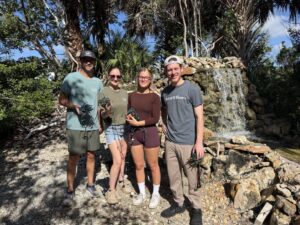
Employees from Doc Ford’s Rum Bar & Grille on Fort Myers Beach decorated Lakes Park for the annual Halloween Express and Fall Festival. The festival runs through Oct. 31. Photo provided
Team members from Doc Ford’s Rum Bar & Grille on Fort Myers Beach are helping transform Lakes Park from delightful to frightful for Halloween.
Doc Ford’s employees volunteered on three separate occasions in late September to install decorations along the park’s milelong train track in preparation for the annual Halloween Express and Fall Festival. The labor-intensive decorating process begins weeks ahead of the popular seasonal event and is an annual volunteer tradition for the Fort Myers Beach restaurant.
“Our team always looks forward to helping Lakes Park get ready for Halloween,” said Rebecca Vizcarra, general manager of Doc Ford’s Rum Bar & Grille on Fort Myers Beach. “It’s become a tradition for us, and it’s rewarding to see everything come together knowing how many families will enjoy it throughout October.”
Doc Ford’s team members have a longstanding history of volunteering at Lakes Park. In addition to helping decorate for Halloween, employees have volunteered during the holiday season and previously created and installed a miniature version of the beloved Fort Myers Beach restaurant along the route of the Railroad Museum of South Florida’s miniature train ride.
Running now through Oct. 31, the Halloween Express operates weekdays, 10 a.m. to 2 p.m. and 6 to 9 p.m. and weekends, 10 a.m. to 9 p.m. Lakes Park is at 7330 Gladiolus Drive in Fort Myers.
Pictured above, South Beach Grille owners Brad and Susan Phillips have reopened the popular South Beach Grille at Santini Marina Plaza on Fort Myers Beach. Photo by Nathan Mayberg
A Fort Myers Beach favorite is back on the fine dining menu at Santini Marina Plaza. The South Beach Grille, one of the island’s most popular restaurants and a recipient of many Fort Myers Beach Observer Best of the Beach Awards, since opening its doors two decades ago, is back in business for the first time since Hurricane Ian.
Like all of the tenants at Santini Marina Plaza, the restaurant was flooded during Hurricane Ian in 2022.
“It was tough,” owner Dennis Phillips said. “We really weren’t sure until a year and a half ago that we would come back out here with the way the beach was,” Phillips said.
The devastation to Fort Myers Beach made Phillips wait before signing a lease with Santini Marina Plaza owner Yariv Shaked to return.
Asked what had changed on the menu, Phillips gave the answers that South Beach Grille’s fans will be glad to hear. Just about nothing that he can think of.
Longtime customer Johanna Farley, who was at the grand opening with friends, asked Phillips if her favorite dish, the seafood chowder was still on the menu. “It’s still on the menu and the same chef is cooking it,” Phillips replied.
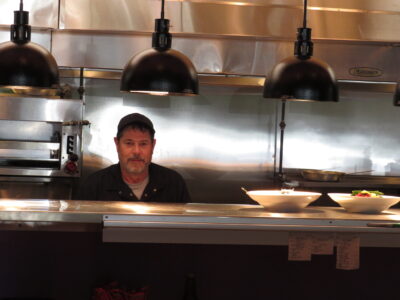
The head chef, Cory Morin, worked for many years at South Beach Grille before Hurricane Ian hit. He was very busy in the kitchen when we arrived, preparing meals for the diners who had assembled for the grand opening.
South Beach Grille head chef Cory Morin is back, one of many veteran employees of the restaurant who have returned. Photo by Nathan Mayberg
South Beach Grille head chef Cory Morin is back, one of many veteran employees of the restaurant who have returned.
Photo by Nathan Mayberg
Morin’s return is one of many who are backed, who used to work at the South Beach Grille and the other restaurant at the plaza previously owned by Phillips – Oliver’s.
Having those employees back four years later makes the restaurant’s return that more special for Phillips, his wife Susan, and all their loyal customers. The bar was full early Monday evening, just a few hours after they had reopened. The South Beach Grille celebrates happy our every day from 3 p.m. to 6 p.m. The restaurant has an extensive wine list.
Phillips moved the restaurant from one side of the plaza to the other, where there is more space. The new dining room has 20 more seats than the old one.
The South Beach Grille is known for their large menu of fine dining favorites like their rack of lamb, filet mignon, Alaskan king crab legs, Florida lobster tail, grouper Americano with parmeasean and spinach and baby bella mushrooms, their grilled salmon, angus meatloaf, shrimp scampi, oysters, seafood pasta, Danish baby back ribs, pan-seared sea scallops, and pan-seared jumbo lump crab cakes.
For Craig Sheely, his favorite item on the menu is the burger.
Farley, who was quite happy to learn the seafood chowder was on the menu, was also marking the two-year anniversary of the death of her husband Jim Farley, and made a toast with Sheely and his wife Narianne and their friend Jill Vos. Mr. Farley was the president of the Estero Bayside Association, and led the association into being one of the very first condo buildings to reopen after Hurricane Ian. Mrs. Farley discovered the newly-opened South Beach Grille two decades ago when she was staying across the street at the former Wyndham Garden Inn and searching for the new condo she and her husband, a former vice president of NBC Radio News, would move into. “I was here when they first opened,” Farley said. “We ate a lot here,” she said. “It’s so friendly.”
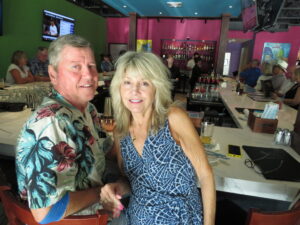
Paul Budil (left) and Michelle Feldheimer (right) enjoy the full bar at the grand reopening of the South Beach Grille. Photo by Nathan Mayberg
Vos said it was nice tohave another restaurant back on the “south side” of Fort Myers Beach again. “And we can walk here,” Marianne Sheely said.
“We are so glad to have them back,” Farley said. “We really missed it.”
The South Beach Grille first opened its doors in 2004, started by Brad’s father Dennis. “He pulled me into it,” Brad said. Phillips and his wife Susan both grew up in Naples and now live in Bonita Springs.
The restaurant had a soft opening on Friday and Saturday by invite, before opening to the public on Monday. Many told the owners how much they missed the restaurant.
“I am so happy that they are back,” Michelle Feldheimer said. “We have missed them.”
“It feels good,” Mr. Phillips said of the reopening. “I missed Fort Myers Beach. I missed the drive from Bonita Springs. I am looking forward to life getting back to normal.”
The Fort Myers Beach Chamber of Commerce announced that discounted, advance tickets have gone on sale for the 36th Annual American Sand Sculpting Championship, which is returning to the DiamondHead Beach Resort November 19-23, on Fort Myers Beach.
This year’s championship celebrates America’s 250th birthday with the theme “Stars, Stripes & Sand: Sculpting the American Story.”
Guests are encouraged to purchase tickets early and save, with advance general admission available for just $8 per person, compared with $10 at the gate. Family packs and weekend packs are also available online at www.fmbsandsculpting.com.
Fort Myers Beach will once again welcome world-class master and advanced amateur sand sculptors for five days of artistry, competition and family-friendly entertainment. There will be 29 sculptors participating, including 12 master sculptors and 12 advanced amateur sculptors, representing 10 states and five countries. The 2026 sculptor roster includes artists from the United States, Canada, Mexico, the Netherlands and England.
Guests can watch the sculptors transform ordinary beach sand into extraordinary works of art and enjoy a full lineup of activities throughout the event. In addition to the professional competition, the championship will feature an amateur sand sculpting competition, more than 80 vendors, food and beverage vendors, live entertainment, hands-on sand sculpting lessons, professional sand sculpting demonstrations, Quick Sand speed-sculpting shows and a dedicated sand play area for children.
The event will be held on the beach behind DiamondHead Beach Resort and the neighboring Estero Island Beach Club at 2000 Estero Blvd.
Event hours are 10 a.m. to 5 p.m. daily, Nov. 19-23. The weekend will also include demonstrations, entertainment and family activities.
On Sunday, Nov. 22, People’s Choice voting will close, and the People’s Choice winner will be announced along with the awards ceremony. There will be a final opportunity on Monday, Nov. 23, to view the completed sculptures, along with plein air and other art activities presented by the Fort Myers Beach Art Association.
Last year’s championship drew more than 15,000 attendees to experience one of Fort Myers Beach’s signature annual events. With its combination of extraordinary sand art, competition, demonstrations, entertainment and activities for all ages, the championship offers a unique celebration of creativity and community on the beach.
Volunteers are needed to assist guests and support event operations. To sign up to volunteer, visit www.fmbsandsculpting.com/2026-volunteers.
The Amateur Sand Sculpting Competition will take place Saturday, November 21, from 10 a.m. to 3 p.m., with awards at 4 p.m. Registration is $10 per person/sculptor, and participation is limited to 20 plots on a first-come, first-served basis.
For the complete event schedule, sculptor lineup, parking information, Amateur Competition details, vendor information and event updates, visit www.fmbsandsculpting.com.
The American Sand Sculpting Championship is proudly presented by the Fort Myers Beach Chamber of Commerce, in collaboration with The Sand Lovers, LLC, and DiamondHead Beach Resort.
“Stars, Stripes & Sand: Sculpting the American Story gives us an opportunity to celebrate not only the incredible talent of our sculptors, but also the stories, traditions and spirit that bring us together as Americans. Join us this November as we celebrate together, create magical works of art and make lasting memories,” said Fort Myers Beach Chamber of Commerce President and CEO Jacki Liszak.
Southwest Florida beaches have some of the softest, finest sand, which makes it the PERFECT medium for sandsculpting events and competitions. This November, two Florida beach towns will be hosting these events that the public is welcome to attend.
Add this PROMO CODE for an extra 15% OFF: FROSTOBER
Find out what’s happening on Fort Myers Beach by checking the FMB Chamber Event Calendar below.
For specific information on live music or happy hours at FMB Chamber member restaurants, visit their Live Music page or Happy Hour Page.
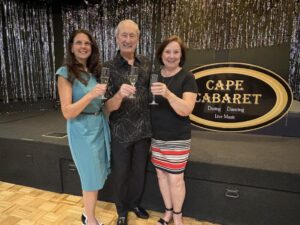
Incoming owner Amy Ginsburg with Joel and Carol Notes, long-time owners of Cape Cabaret
A popular Cape Coral entertainment venue is coming under new ownership.
Cape Cabaret, a vibrant hot-spot featuring multiple performance spaces under one roof, will continue operating without interruption under new local ownership beginning Sept. 1.
Joel and Carol Notes have sold the bus
iness to longtime Cape Coral resident, arts advocate and entrepreneur Amy Ginsburg following several weeks of discussions about preserving the venue’s staff, artists and community legacy.
“Under Ginsburg’s ownership, Cape Cabaret will continue its current programming while gradually expanding entertainment offerings to include additional tribute productions, nationally touring artists, cultural events and community partnerships designed to strengthen Cape Coral’s growing arts and entertainment district,” a release announcing the sale states.
Guests with existing reservations or tickets will experience no interruption in operations, and current employees and scheduled performers will continue as planned during the ownership transition, officials said.
“Cape Cabaret was one of our passions in life,” said current owner Joel Notes. “We had the opportunity to bring live entertainment to Cape Coral for 10 years, and it worked out just beautifully. Now we’re ready to transition into the next stage of our life, but we’re taking wonderful memories with us.”
Ginsburg said she was overjoyed to announce that she has purchased Cape Cabaret, “Cape Coral’s only multi-auditorium entertainment venue!”
“Owning a business like this has been my dream for as long as I can remember,” Ginsburg said. “It’s remarkable how the right opportunities and people materialize at precisely the right time. Joel and Carol have perfected the recipe for success at Cape Cabaret. Other than a pinch or dash of unique entertainment flavor, I have every intention of following their recipe. This will continue to be the same Cape Cabaret everyone knows and loves.”
Ginsburg, a Cape resident for more than four decades, is the founder of Cut the Chord Entertainment, “a boutique talent management and booking agency representing touring artists and connecting them with orchestras, presenters and performing arts centers throughout the United States.”
She also serves as president of Cape Arts Network, Cape Coral’s arts alliance, and is “committed to strengthening the city’s arts and cultural identity through collaboration, live performance and community engagement.”
Ginsburg, who has worked in orchestral music in Southwest Florida for 20 years, said having an accessible venue is always at the top of the list for those in the industry.
“When you have that, that’s a big piece of the puzzle when it comes to being able to exercise creative muscles,” she said. “If you have your owns space, you have all the dates you could ever want and the ability to be creative. That’s all I ever wanted out of music, was creativity.”
Ginsburg has attended and even performed at Cape Cabaret over the years, and is excited to now be at the helm.
“It’s a model that works,” she said. “It’s consistently busy. What’s there works. I have no intention of taking that away from a community that clearly wants it. But, there’s definitely room to add and enhance programming.”
Ginsburg said she has a love for what she calls classical crossover — where popular and classical music are combined by artists.
“I definitely plan to bring programs like that here,” she said. “There are a handful of artists I work with who are really good at making classical music relevant to audiences that otherwise probably wouldn’t have a relationship with it. There are multimedia programs that are compact enough that they can fit in a space like Cape Cabaret.
“There are programs that I’m sure haven’t occurred to me yet, and are artists that will cross my path an I’ll go, ‘Yeah, you know what, let’s try it.’
“It’s going to be a great place to workshop concept programs. My hope is that this will be a space for a lot of world premieres. We test drive things here and then we send them out to the world for everybody else to love them.”
Joel and Carol Notes have been Southwest Florida residents since 2000.
Before relocating to Florida, Joel spent many years in commercial real estate and retail in the Washington D.C. area, learning the ropes from his father. His desire to explore new industries led him to purchase Sandy Parrot and The Buddha in addition to shopping centers in Fort Myers and Cape Coral, the release states.
The Notes bought the former Italian American Club building in 2015 and Joel and Carol spent nearly two years renovating.
It has served the Cape as Cape Cabaret for more than a decade as the only venue of its kind in the city.
“(The Notes) threw their heart and soul into this venue,” Ginsburg said. “They are just good people. The people who work here love them.”
Ginsburg said the staff is being retained, calling them, “amazing, dedicated, and hardworking.”
Cape Cabaret is at 4725 Vincennes Blvd. in the South Cape.
Editor’s note: This story has been updated to include more information provided by the incoming owner, Amy Ginsburg.
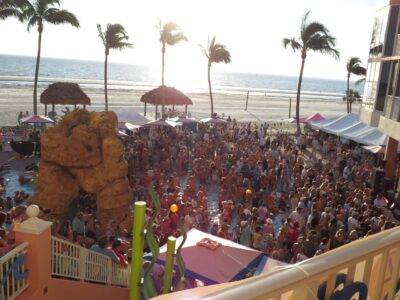
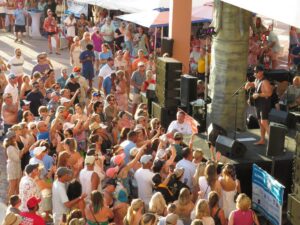
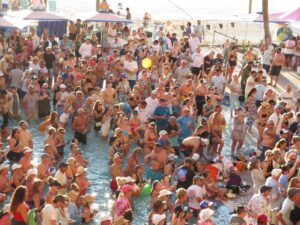
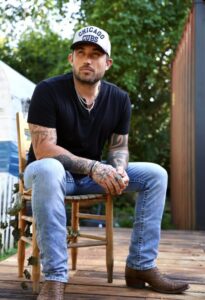
The Island Hopper Songwriter’s Fest announced Michael Ray will headline the closing pool-party performance on Sunday, Sept. 27, at Pink Shell Beach Resort & Marina on Fort Myers Beach.
A Florida native, Ray has three No. 1 country songs, “Kiss You in the Morning,” “Think a Little Less” and “Whiskey and Rain.” Ray is known for blending traditional country with modern radio appeal. His 2018 album, “Amos,” named after his grandfather, produced hits like “Her World or Mine” and “One That Got Away.”
The Islander Hopper Songwriter’s Fest will return to the Pink Shell Beach Resort on Sunday, Sept. 27. File photo
The Island Hopper Songwriter Fest also announced LOCASH will perform at the Island Hopper Songwriter Fest in the new “Stars on the River” concert on Wednesday, Sept. 23, at Caloosa Sound Amphitheater in downtown Fort Myers.
Fresh off their third album, “Bet the Farm,” the popular duo will bring their signature style to the Island Hopper stage with BMI singer-songwriter Alexandra Kay as the opening performance.
Blending country energy with beach vibes, LOCASH is riding high from the summer anthem, “Let the Country Music Play.” Released as a collaboration with Parmalee, the song is a country reimagining of Rupert Holmes’ 1970 classic, “Escape (The Pina Colada Song).”
Known for their platinum breakout hits “I Love This Life” and “Hometown Home,” LOCASH singer-songwriters Preston Burst and Chris Lucas have earned eight charting singles and more than 1 billion combined streams.
LOCASH and Michael Ray add to an already exciting lineup including Edwin McCain who will be headlining Island Hopper’s “Westin Unplugged” Monday, Sept. 21, at The Westin Cape Coral Resort at Marina Village in Cape Coral.
While most Island Hopper shows are free, the LOCASH, Michael Ray and Edwin McCain performances, along with a few other experiences, will be ticketed. Those include the ACMA Showcase at Sidney & Berne Davis Art Center in downtown Fort Myers, a sunset cruise on Fort Myers Beach and dinner experiences at Gather in Cape Coral and Luminary Hotel & Co. in downtown Fort Myers. Stay tuned for upcoming details at Islandhopperfest.com.
In addition to the headlining performances, more than 60 BMI singer-songwriters will perform more than 80 performances during the 10-day music fest. Be sure to catch a live Island Hopper Songwriters Fest performance at these four locations around the Fort Myers area:
Captiva Island, Sept. 18-20
Cape Coral, Sept. 21-22
Downtown Fort Myers, Sept. 23-24
Fort Myers Beach, Sept. 25-27
In its 12th year, Island Hopper Songwriter Fest, named one of the Top 5 music fests by USA Today 10 Best Readers’ Choice Awards, gives fans the opportunity to see the country’s top singer-songwriters perform up close with a tropical setting as the backdrop.
For the full lineup and ticket information, download the Island Hopper app or visit Islandhopperfest.com.
The Fort Myers Philharmonic will open its 2026-2027 season with a moving tribute to the heroes of Sept. 11 and the first responders who continue to serve our community.
“Honoring First Responders,” under the direction of Music Director Paul Nadler, will take place on Friday, Sept. 11, at 7:30 p.m., at the Barbara B. Mann Performing Arts Hall.
The special commemorative concert marks the 25th anniversary of the Sept. 11 terrorist attacks with an evening of remembrance, reflection and extraordinary music.
Before the performance, WGCU’s Tom Hall will present a short film featuring interviews with first responders who served at the World Trade Center on Sept. 11, offering personal reflections on courage, sacrifice and resilience. The film sets the stage for an evening dedicated to honoring those who answered the call in one of America’s darkest moments.
The musical program opens with Samuel Barber’s “Adagio for Strings,” one of the most poignant and emotionally powerful works in the orchestral repertoire. Its timeless beauty has become synonymous with remembrance and healing.
The concert culminates with Mozart’s “Requiem,” the composer’s final masterpiece and one of the most celebrated choral works ever written. The Fort Myers Philharmonic will perform alongside the acclaimed Fort Myers Symphonic Mastersingers, an 80-plus-voice ensemble of men and women dedicated to musical excellence. Led by Matthew Koller, the Mastersingers will be joined by an outstanding quartet of soloists Sarah Tucker, soprano; Gina Perregrino, mezzo-soprano; Joshua Blue, tenor; and Lawson Anderson, bass-baritone. Together, they will bring this monumental work to life with the power, beauty, and emotional depth that have inspired audiences for generations.
“Music has a unique ability to bring people together, to help us remember, and to express emotions that words alone cannot,” said Paul Nadler, music director and conductor of the Fort Myers Philharmonic. “As we mark the 25th anniversary of Sept. 11, this performance honors the extraordinary courage of those who responded that day, while recognizing the dedication and sacrifice of the first responders who continue to protect our community every day.”
The evening serves as both a tribute and a celebration of resilience, hope and the enduring strength of the human spirit.
Community members, veterans, active and retired first responders, and families are invited to join the Philharmonic for this meaningful evening of music and remembrance.
For tickets, visit fmphil.org. Ticket prices start at $65.93 (including processing fees and taxes). For more information, email info@fmphil.org or call (239) 350-1520.
The Barbara B. Mann Performing Arts Hall is on the Florida SouthWestern campus at 13350 FSW Parkway, Fort Myers.
Calling all horror fans, movie buffs and pop culture collectors! Florida Horror-Fest, the premier single-day touring horror convention, is officially making its way to Southwest Florida. On Saturday, Sept. 19, the DoubleTree by Hilton Fort Myers at Bell Tower Shops will transform into the ultimate regional hub for all things spooky, offering an immersive day of buying, selling, and community fandom.
Running from 10 a.m. to 5 p.m., Florida Horror-Fest is a dedicated mecca designed for every tier of fan, from vintage horror memorabilia seekers to modern thriller buffs. The convention features a sprawling marketplace packed with vendors, local artists, and exhibitors showcasing a massive variety of comicbooks, magazines, toys, movies, movie posters, artwork sketches, apparel, and more.
Event highlights include:
• The Horror Marketplace: Dozens of specialized vendors buying, selling and trading rare horror collectibles, hard-to-find movie posters, and retro monster toys.
• Celebrity Meet-and-Greets: Fan-favorite industry professionals and celebrities will be in attendance for exclusive signings and photo opportunities throughout the day, featuring actor Warrington Gillette (Jason from “Friday the 13th Part 2”) and actor James C. Leary (Clem from “Buffy the Vampire Slayer”).
• Family-Accessible Pricing: General admission is $20. Kids 11 and under are free to enter (limit one child per paid adult admission), and additional children 11 and under are $10.
“Florida Horror-Fest is built by long-time collectors, for collectors,” according to the promotional team. “Our goal is to give the Fort Myers community a focused, high-energy environment where they can hunt for their favorite memorabilia, meet industry professionals, and share their passions with thousands of local peers.”
The DoubleTree by Hilton Fort Myers at Bell Tower Shops is at 13051 Bell Tower Drive in south Fort Myers.
For ticket purchases, vendor applications or additional schedule information, visit the official event page at floridahorrorfest.com or follow updates on Facebook and Instagram.



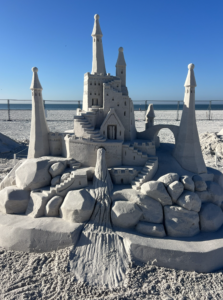
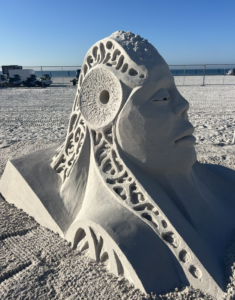 The Fort Myers Beach Chamber of Commerce announced that discounted, advance tickets have gone on sale for the 36th Annual American Sand Sculpting Championship, which is returning to the DiamondHead Beach Resort November 19-23, on Fort Myers Beach.
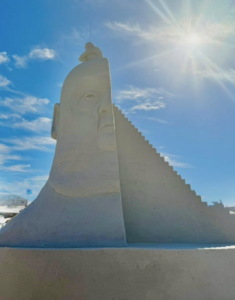
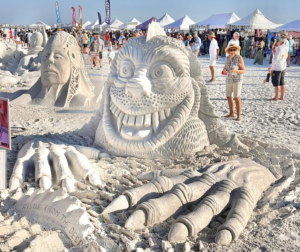



 The Island Hopper Songwriter’s Fest announced Michael Ray will headline the closing pool-party performance on Sunday, Sept. 27, at Pink Shell Beach Resort & Marina on Fort Myers Beach.